



- Crank up the radio, and sing along. Sorry NPR, babies don't like you. Anything with some good rhythm and melody seems to work for us. The singing is a requirement.
- Make sure that the seat is adjusted comfortably. I realized a few weeks ago that she was reclined a bit more than she liked, meaning that she had to hold her head up to see her hands. Vewy fwustwating.
- Double check the diaper. I also realized that after-school pickup came right before her usual change and the wetness was irritating. Changing before the ride made for a marked improvement.
- One word: snacks. I like the Gerber fruit puffs in a spill-proof snack cup
.
- Small board books...I mean, really small--toddler's hands small. Our copy of Maisy's Favorite Animals
has been worn out by three sets of hands, but is beloved by all!
- Play 'what's in the sock?' This one works remarkably well. Put a baby toy, finger puppet, or other safe object in a sock (or wrap it in a bandanna) then have your child work to get it out.
- Provide three or more things to play with, preferably ones that haven't been too played with.
- Take off the poor kid's shoes and socks. Sweet pea can get really worked up trying to get hers off and those toes are just too succulent to leave alone!
- And if all else fails, a sucker. We like dum-dums, but saf-t-pops (with the looped handle) are probably safer (she says guiltily!).
Showing posts with label toddlers. Show all posts
Showing posts with label toddlers. Show all posts
Nine No-Fail Ideas to Keep a Toddler Happy in the Car
In the past few weeks our youngest (16 months) has gone from being a happy little traveler to being a rolling whiner. From the moment she realizes that the car ride is coming she stiffens up and fusses. After fifteen minutes in the car she starts to really get mad (the twice-daily rountrip to school is 20 minutes, mind you), and forget about anything longer--it's just not worth the bother. So here they are, my top nine ways to keep the littlest one happy in the car:


Kneesocks = Fun; Legwarmers = More Fun
 {click for giant, higher-resolution image}
Booklist: Very Best, Most Favorite Kids' Picture Books Ever

I was excited to learn about Freedom to Read Week, an "annual event that encourages ... to think about and reaffirm their commitment to intellectual freedom." Then I realized that it was just for Canadians. Now, I love books and appreciate Canada, so I've decided to celebrate the opportunities I have to read, think, and share whatever I please. So, in observation of this worthwhile idea, here's a list of a few of our very favorite children's books of the minute. Honestly, our favorites change with alarming rapidity (since you probably have children you know just what I'm talking about), but these are classic books that I reccommend heartily.
 This may be the only book on my list with even a hit of subversiveness (thanks to some cute little treasures hidden in the illustrations--can you find the woman breastfeeding, or the girl on the potty?), but it's definitely #1 on our list! In the Town All Year 'Round
 is an absolute classic. The narrative-free illustrations take you through the seasons of the year in images of a single town. There are special threads to follow (Cassie the cat is on every page, meets another cat, falls in love...has kittens!), and so much to see. We've looked at this book a hundred times and each of us find something new each time. Don't miss this one!
We love all of his books, but Richard Scarry's What Do People Do All Day
 is right at the top of our list. The pictures are detailed and (aside from the fact that the characters are, well, pigs, worms, cats, and other animals) present lots of solid information about things preschoolers really need to know about and are fascinated by (community helpers, how houses are built, where wood comes from!). I loved this book as a kid, and it's such a delight to share. My second choice from Richard Scarry would have to be Richard Scarry's Best Storybook Ever!
 , a compilation of many favorite stories.
We've just finished reading The Boxcar Children
 , one of my very favorite books from childhood. It follows four orphaned children as they try to escape their (apparently unfriendly) grandfather and set up housekeeping in an abandoned boxcar in the woods. It's a charming story with lovely, relatable, well-mannered characters, and we all loved reading about how they kept their milk cold in the stream and cooked food over the fire. Written in the early 20th century, has weathered the years very well.
When I was nine or ten I had a book that told the history of everything and I read that thing until it fell apart (and I can still tell you about the discovery of vulcanized rubber and the history of vaseline--creepy, I know). Daisy and Scout both seem to have inherited my love of facts and trivia, so I was excited when I picked up the Smart-opedia Junior: The Amazing Book About Everything
 . I was even happier when I looked through it and found that it tells you just enough about, well, everything! From explaining how your body works in logical progression to the workings of the universe, she's absorbed by the wonderful illustrations and straightforward information.
 Finally, I'm going to cheat by throwing in all the rest of our favorite books in a single volume: The 20th-Century Children's Book Treasury.
 I'm not usually one for greatest hits-type compilations, but this one really gets it right. It's a book we keep in the car, pack for trips, and read over and over. It includes the full text and pictures from stories (from Madeleine to Harry the Dirty Dog to Millions of Cats) by all of your favorite authors (from the Berenstains to Maurice Sendak to Kevin Henkes). There are a very few duds in the bunch, but there's enough here to keep occupied for years. It's my go-to baby shower gift :)
What's holding your kids' attention these days? Do you have a favorite from your own childhood that you share? I'm always in the market for a new one!
Fall Leaves to Color
Fall feels like it's just slipped by us, but we found some time the other day to make some pretty fall leaves to brighten up our windows. It was such fun, all three kids really got into it...even the baby's little scribbles turned out cute leaves.

Materials:
- white coffee filters
- markers
- squirt bottle filled with water
- dry dishtowel
- scissors
- iron
- Set your iron to high and iron your filters flat, then use your scissors to cut out some cute leaf shapes. We did poplars, maples, oak, and other assorted made up leaves :)
- Color neatly or scribble all over the leaves, your choice. I like using colors that are pretty compatible (e.g. red-orange-yellow or orange-brown-yellow) so that they don't turn really muddy when they mix together.
- Place your colored leaf on the towel and spray until pretty wet. The colors will bleed together for a nice fall effect.

Ten (more) Surefire Ways to Occupy Your Toddler
A couple of months ago I shared a list of some of my favorite activities for keeping toddlers occupied for a bit when you need to cook dinner, check your email, or (goodness me!) take a break on the couch for a few minutes. Well, it was such a hit that I thought I'd better share a few more of my standards. I'll be sharing ideas for preschoolers and older kids in the next few weeks, so check back!
- Set up a game of kitchen-ball with a laundry basket and a selection of small balls (crumpled paper balls are great, or tennis balls, wiffle balls, large bouncy balls, even beanbags work--nothing that could be a choking hazard, depending on the age of your child!) Have your child try to toss the balls in from a short distance. They'll usually wind up chasing the balls around as they bounce away so it lasts longer than you'd think! Alternately, lay a paper grocery sack on it's side and have the child roll the balls into the bag.
- Get out a muffin tin (one with six holes works well) and provide your toddler with an assortment of small, safe things to "sort" (duplo legos, large bouncy balls, plastic links). Admittedly, it's possible that little sorting will actually occur, but the process of filling and emptying the compartments is just so satisfying!
- Supply your child with a feather or lambswool duster and send them to town cleaning any horizontal surface they come across. I can't guarantee that they'll do a decent job, but is that really the point?
- Tape or tie an empty cardboard mailing tube at an incline to two legs of a table or through one arm of a chair and atop the other arm and have your child send big bouncy balls, matchbox cars, etc through the chute.
- Cut a fairly large slit in the top of a shoebox to make a "mailbox". Provide your child with a deck of playing cards or collection of old hotel key-cards, ID cards, etc (that's the mail!). Show him or her how to drop the cards through the slot one at a time, then dump them out and do it again.
- Provide a dishpan with a bit of water, a little sponge, and a collection of spoons (teaspoons, tablespoons, serving spoons, baby spoons, etc) for your little one to wash and sort. You may want to set this up on a towel in the kitchen to contain the mess!
- Once the spoon wash-and-sort gets old, put the spoons away and add more water, a few small floating tub toys and a little kitchen strainer. Show your child how to dip the strainer in like a net to catch the little toys and lay them out on the towel to dry.
- Rustle up an old wallet and fill it with hotel key-cards, old ID cards, coupons clipped from the Sunday paper, and money-sized bits of construction paper. Watch your child empty the wallet, organize the contents, put everything back in, then start again. Alternately, fill a small purse with little animal figures, old cards, coupons, old keys, etc.
- Cut a tunnel-shaped opening in the side of a shoebox to make a matchbox car garage. Show your child how to drive little cars in, then open the lid to find them again!
- Set up a basket or shelf with a collection of small, empty food containers (i.e. jello or rice pilaf boxes, yogurt cups, butter boxes). Have your child "shop" by filling a grocery bag with whatever's on her "list" (the one in her head, anyway!), then put the groceries back and try again.

cornstarch clay and a color wheel/mixing lesson

For regular playdough use I'm hooked on the Jello recipe, but when it comes to making things to keep I like a dough that's really smooth and more clay-like. My recipe for cornstarch clay makes a very smooth, slightly sticky white dough that takes color really well. Most recently we used it for a hands on lesson in color mixing. (On the boycraft front, this really worked with Scout since it's (a) very visual and (b) required a lot of smashing and mushing around of clay to get the color mixed in!). Using liquid food coloring you can mix small chunks into a range of very vibrant hues. Here's how we did it:
Mix up a batch of cornstarch clay (recipe's at the bottom). Once the clay is cool, divide into seven equal parts. Form into balls, then use your finger to poke a hole in the top of six of them. Place four drops of food color in each as follows:
- four red drops
- three yellow drops, one red drop
- four yellow drops
- four green drops
- four blue drops
- three red drops, one blue drop

We put them in a circle on a piece of paper and talked about "primary" colors (red/blue/yellow) and "secondary" colors (orange/green/purple). We then cut small, equally sized chunks of primary colors and blended them together to make secondary colors...look, they are the same as the big balls we made with food coloring!

Next, we mixed "tertiary" colors (red-orange, orange-red, orange-yellow, yellow-green, green-blue, blue-violet, and red-violet) by combining small, equally-sized chunks of each primary color with the secondary colors on either side. These made some gorgeous colors!

Now, I don't have a picture of this, but Scout had the best time smashing the colors together in a big, circular rainbow, then rolling all the colors together until we had the most stormy grey color you can imagine. Quite a remarkable experiment!
Cornstarch Clay:
Ingredients
- 2 c baking soda
- 1 c cornstarch
- 1 1/4 c water
- Combine ingredients in a medium saucepan.
- Cook over medium heat, stirring constantly until it begins to look like mashed potatoes.
- Immediately remove from heat, let cool a bit, and knead to form a ball. (Be careful not to overcook or it gets lumpy and hard).
 " by Carolyn Haas-Buhai)
Ten Surefire Ways to Entertain a Toddler for Half an Hour (or more!) When You Only Have Ten Minutes
- Draw a shape or letter outline on a sheet of paper. Give your child a sheet of stickers and have him fill the outline in. Stickers are great for strengthening the pincer grasp and muscles your kid will need for cutting with scissors and holding a pencil properly.
- Set him up with poker chips and a piggy bank or box with a slit cut in the top of it. Have him sort the poker chips by color then slip them into the slot one by one.
- Find a small plastic basket or shoebox and tie a string to it creating a wagon or sled. Your child can round up his favorite stuffed animals or treasures and pull them around the house. You can also make this into a train with the addition of more boxes or baskets in the line
- Line the kitchen chairs up and throw a blanket over them to create a tunnel. Once your child gets tired of crawling back and forth, have him bring a pillow and blanket in and pretend to camp in the tunnel.
- Collect two gallon-sized ziploc bags. In one bag, combine 1 cup water, several drops food color, and a scant 1/4 cup oil. Seal, then tape it shut. Place in larger bag, seal, and tape it shut. Show your child how the colors don't mix together and the oil floats on top. This shouldn't leak, thanks to your good taping job, but I wouldn't let your kid play with this on the carpet :)
- Get another gallon-sized ziploc bag. Put a good squirt of tempera paint in along with a little water (maybe 4 parts paint to one part water). Seal and tape, then place the bag flat on the table or floor. Show your child how he can trace pictures on the bag and smooth it out to start again.
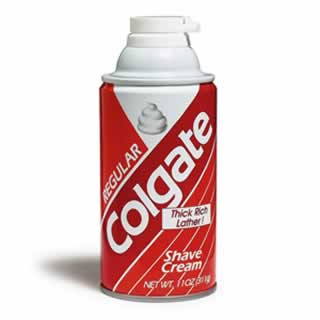
- Hopefully you still have some gallon ziploc bags. Fill one with shaving cream (I'm talking something like Barbasol here, not shaving 'gel') and add a few drops of food color, either a single color or a few drops of two primary colors to blend. Seal and tape, then have your child mix it all together by manipulating the bag with his hands. Once he's done mixing, snip a corner off of the bag and show your kid how to squirt it out onto the table (or bathtub if you're feeling less inclined to clean up!), then smooth it out and draw pictures with his finger. When he's done give him a towel to wipe it all up. (image via prestomart.com)
- Gather an collection of small, washable things (e.g. coins if your child won't put them in his mouth, toy cars, plastic animal figures, rocks, etc), a dishpan of warm water, old toothbrush, bar of soap, and towel. Set up a station for your little one to rub the toothbrush across the bar of soap, scrub his items, then rinse them and set them out to dry.
- Collect a couple of bowls, a funnel, and some measuring cups, plus 1-2 colors of dried beans. Lay out a large fluffy towel (keeps the beans from bouncing away when they're inevitably spilled and dropped). Have your child transfer the beans from one bowl to another using measuring cups. Show him how a larger cup holds more beans and how the funnel works. Optionally, provide your child with an empty plastic water bottle to fill with beans using the funnel. When it's about half full put the lid on and have your child shake it and roll it around on the floor.
- Set your child up with a sponge and a sink full of soapy water to wash his plastic dishes, cups, and utensils. Have him rinse them and lay them out on a towel or in a dishrack to dry. This may be a bit of a mess, but hey, it's the easiest mess to clean up ever!!
nature collages
 Jasper's nature picture, with maple leaf, maple seeds (samaras), pine needles, pine twig, pinecone, bark, and a tiny flowerOver the weekend we had a ton of work to get taken care of so we were outside most of the day (except when our neighbors were celebrating something with an outdoor karaoke party). Josie remembered doing this last fall before Adelaide was born and suggested it again. With all the neat stuff we have sprouting right now there was a bounty of nature for our nature pictures.
My apologies for not having more pictures of the process, but we were all working on it together (having put aside our yard work!).
Materials:
- Heavy paper: cardboard, matboard, cardstock, etc.
- White glue or hot glue for heavier things like shells or large pinecones
- Nature goodies collected from your yard, a nature walk, the park, the neighbor's yard... If you're planning to keep this you may want to select things that dry well (avoid certain flowers or very pulpy leaves).
- May need a craft knife to trim nature objects
- Have your child lay out their objects on the paper in whatever arrangement they'd like. For very three-dimensional objects such as pinecones you may have to shear off one side of the object to give a glue-able area (don't forget to look for seeds inside the pinecone!).
- Lift each object and lay down a good amount of glue.
- Have your child place the object back on the glue (or do it yourself if you're using hot glue).
- Make sure to leave it flat until the glue dries, then handle fairly gently.
Josie's work. She decided to line the objects up along the bottom (maple seeds, pine needles, pinecone, flower, with a long pine twig), then draw them above.
 Here's an awful picture of Josie's from last fall--she was just so excited to be able to label everything. I just couldn't get a better shot since it's been installed in Daddio's office in a shadowbox (for-evah!).
 When you're done go get a straw and pretend to drink nectar from all the flowers with your proboscis!
kids and paint, paint and kids
 I just loved this idea for making paint ice cubes--another nice way to get the mess of painting outside where you can just hose the kids off when they're done. Also nice for toddlers who would have fun with paint but trouble with a brush.
Josie really liked Pepper Paints' painted sticks. We've been hiking more and could use some good walking sticks, so we might have to give that one a try.
I've also heard that you can make scented watercolors out of kool-aid, so I think we'll try and work that one out sometime this week!
photo via funmajors.blogspot.com
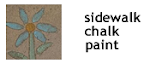
kid-made sidewalk chalk paint

It's my eternal struggle. I want the children to paint, I truly do, but it can just be so so messy...especially for a two year old who paints for two minutes then requires ten minutes worth of cleanup (and a bath to get it out of his hair). Often enough I bite the bullet and do it anyway, but with Summer comes the marvelous opportunity to do it every day, especially now that we've found this awesomely cheap recipe for making our own sidewalk paint.
 You need:
-liquid food coloring (like what you find in the spice section at the grocery)
-box o' corn starch
-water
-minimum 8 oz individual containers for each color
 Method:
-Measure 1/4 cup cornstarch into each cup.
-Add 1/4 cup water to each.
-Drip in 5-10 drops of food coloring.
-Stir it up. At first it will seem as though the cornstarch just won't mix in, but all at once it comes together. Just don't put the water in first or it's significantly tougher to get it to mix up.
 -Add more color for intense colors, less for pastel shades. Our box has recipes on the back for additional shades and we found that the 'egg dying' recipes worked great for this.
-The finished paint may seem thin, but it paints on just great. You can use more cornstarch next time if you'd prefer a thicker paint.
-We tested on the driveway, fence, and brick, and the paint came off of all the surfaces just fine.
 Finally, find your personal painting style. Josie's into painting happy-faced flowers and hopscotch boards, while Jasper's a mix it all together and see how it turns out kind of guy.
*note--One of the comments pointed out that the paint is slippery when it's wet! We didn't test this theory out, but be careful!
more from the collective:
- Frances England CD giveaway!
- butterfly in a chrysalis puppets (so cool!)
- stamping with potatoes and cookie cutters
- printmaking with bubble wrap and corrugated paper
- all craft posts
- subscribe to our blog over on the right side ---->
Ice Treasures: link

I was looking around for something totally unrelated and stumbled upon Let's Explore, a blog serving up creative ideas for preschoolers. Today's post on Ice Treasures really caught my attention since the weather's heated up so much in the past few weeks and we've been spending as much time outside as possible (the better to let the baby sleep!). I have a few ideas lined up, but this is so cool!
(as an aside, you might want to check out the Let's Explore store where you can find some very handy art totes (empty or filled with creative goodness) and kits/busy boxes for various projects (e.g. puppetmaking). Free shipping with code "maymoms08" through the end of May. I looked and looked for the right box to put together a take-anywhere art kit like the one I had as a child and just couldn't find it among the tool and fishing tackle boxes at Target, Wal-Mart, Home Depot, Ace, or the local hardware store. She has it!)
printmaking: bubble wrap and corrugated paper
 A few weeks ago we did some potato stamping and ever since Josie's been into the idea of making prints ever since. She'll watercolor a picture, then try to make a print onto a clean sheet (not entirely effective), and we tried making a print of a crayoned picture using our iron (even less successful). This worked very well and really held Josie's (5) and Jasper's (2.5) attention for a long time (20 minutes). We used bubble wrap with small bubbles (it's what we had!) but I think larger bubbles would work well also, and a combination of the two would be fun to experiment with.
Materials:
Bubble wrap, textured paper (ours was corrugated), crumpled paper, or other thick papers or plastic goods that have a strong texture

Thick multicolored tempera or poster paint
Brushes
White paper to print on
Process:
Paint a design onto the bubble wrap or textured paper; don't get too much paint on or you'll lose the raised design and get a lot of paint down in the cracks--also interesting, but you lose some of the 'print' concept.
Place the paper on top of the painted surface and press down firmly with your hands or a brayer or rolling a wooden dowel. Peel paper off.


If you're using the crumpled paper it seems to work best to dip it into the paint then print it all over the paper to make a pattern. This is fun since you get a completely different variation on the concept of a 'print.' Once the crumpled paper is unfolded it's interesting to see where the painting surface was relative to the unpainted part.
Naturally colored playdough: link
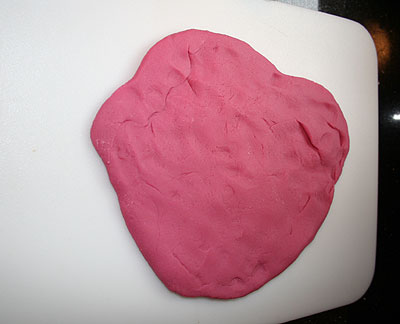 What Knot posted a great idea for coloring playdough with beet cooking water. It came out a lovely color and wow, think of the possibilities! Spinach water? Blueberry juice?
more info on choosing a safe sunscreen/sunblock for children: UVA, UVB, what does it mean?

After my post on sunscreen the other day, I kept feeling like there had to be more to know so I kept poking around. Here's what I found:
- Katja at Skimbaco has a very helpful post up expressing her concerns about the ingredients in many sunscreens, a review of the various formulations, and some specifics on good sunscreens to choose...including some that are very reasonably priced. The Baby Blanket
brand sounds almost too good to be true--pretty good choice of ingredients, waterproof, SPF 50, and at $12/9 oz it seems like a bargain. Baby Blanket also makes a number of other products
- The Skin Deep Cosmetics Database that I mentioned last time has a full listing of all the active ingredients in sunscreens, what their efficacy at blocking UVA and UVB rays is, what the potential harm in them is, and how bad it is for you (rated 1-10, very simple to follow). I won't even go over a few of the common ones since the information they provide is so complete and succinct.
- Safe Mama has created another handy cheat sheet distilling all this information into a handy list of good and bad choices in sunscreens. Print it out, shop with it, and feel like a good parent. They have a whole selection of other info sheets covering bath products, skin care, and sippy cups if you're interested.
- SPF: Sun Protection Factor. A measure of how effectively the sunscreen blocks the sun's UVB rays. It's calculated by comparing the amount of time needed to produce a sunburn on protected skin to the amount of time needed to cause a sunburn on unprotected skin.
- UVB: Short-wave part of the spectrum of sunlight; more potent than UVA in causing sunburn, thought to be the main cause of basal and squamous cell skin cancers as well as a contributor to melanomas.
- UVA: Long-wave solar rays. Less likely than UVB to cause sunburn, but penetrates the skin more deeply; considered chief cause of wrinkling and "photoaging." Apparently increases UVB's cancer-causing effects, but may be main culprit of melanomas. Not blocked by all sunscreens, so check the label!!
- Sunscreen: Chemically absorbs UV rays.
- Sunblock: Physically deflects UV rays.
- "Broad-spectrum Protection": This indicates that a product protects against UVA and UVB, but doesn't guarantee coverage against all UVA wavelengths. Sunscreens containing avobenzone, zinc oxide, or titanium dioxide should be effective against entire UVA spectrum.
choosing a sunscreen that's safe and effective
 Last summer I stocked up on tons of sunscreen. Living in Colorado we're at about a mile's elevation (that much closer to the sun!) and it can be brutal, especially for someone as fair-skinned as our oldest daughter. With everything else we were concerned about I was pretty worried that we were coating our children with something several times a day and felt that since I was bothering to buy organic produce I should really be similarly concerned about the safety of our sunblock.
Ideally, a sunscreen would be block both UVA and UVB rays (UVA causes invisible damage while UVB causes the red burn that you see), contain ingredients that don't break down in the sun (since once the active ingredients break down you're at risk for sunburn), and all ingredients would be proven safe for both adults and children. After looking a bit, I found no sunscreen that met all of these criteria. Big surprise. In the end, I had to prioritize, so I made a list of what was really important to me.
Here were my requirements:
- easy to apply, preferably a lotion/cream for faces and a spray for the rest of their body so that I could reapply often, even if the kids were busy
- SPF 30 or better
- something non-stinging since it inevitably finds its way into their eyes
- a water-resistant formulation since we spend a lot of time in the sprinkler
- something that didn't contain really concerning ingredients
- reasonably priced, since we need to buy it by the gallon
In the end, I simply couldn't afford to spend a few hundred bucks on sunblock for the summer, so chose one lotion for the big kids (it got a green rating overall in spite of having some questionable ingredients) and and a more expensive one for our infant since she (a) doesn't use much and (b) is tiny and seems particularly susceptible. I skipped the spray since there was no reasonably priced choice that was also sufficiently safe. Hopefully that will change by next summer.
Finally, while I was looking through their database I checked into the safety of the sunblocks I already had on the shelf. I was surprised to find that the Neutrogena I had bought for myself didn't stand up to the SPF rating on the bottle--explaining why I got a light sunburn (and extra freckles!) on my face a couple of times last summer. If nothing else, you might want to check into the actual efficacy of the sunblocks that you already own to avoid a surprise sunburn.
*Also, don't forget to rate this post using the stars at the bottom of the post...I'm basically interested in knowing whether this is content you liked or didn't like. Thank you so much!
dealing with medical fears and trauma

Luckybeans has a great post today about helping her son deal with routine doctors' visits following traumatic medical care. Her ideas were really spot on, and I wanted to share this with others who might have the same issues with their children and the doctor (or dentist?). You might click around her blog while you're there...it's quite lovely!
Woven strawberry basket pendants: link
I'm still feeling really into Mother's Day, so I was excited to find this fun idea at Scrumdilly-do. I'm not nearly sure where I'm going to find strawberry baskets, but I love the idea of using them for weaving, and these turned into an absolutely charming necklace. I'll make sure to hang mine up with the colored macaroni shell and marker lid necklaces Josie's brought home from preschool!
Surprising sources of BPA, phthalates, and PVC in your house (it's there!)
After a bit of looking over the weekend we realized that although the liquid-holding body of our sippy cups were phthalate and Bisphenol-A (BPA)-free, the lids weren't. Further, our daughter's pacifiers have BPA in the shield that holds the nipple and that...basically everything in our house has something bad in it. After throwing out the cups and switching pacifiers (we're going with the Evenflo Mimi since the nipple shape seems a lot like our standard MAMs), we're still left wondering what else is lurking. Here are some of the surprising sources we found in our trip around the internet:
- Food cans are lined with an epoxy resin coating that almost always contains BPA. This is particularly concerning with acidic foods such as tomatoes, and for liquid baby formula (since BPA has been found to leach out into fatty substances in higher concentrations). Eden Foods is the only company that I know of (or could find) that has removed this from their packaging (for beans, at least, not for tomatoes).
- Rubbermaid has an area on their site devoted to helping you determine whether Rubbermaid products you already own are a source of BPA. For other kitchen items, you can check out the cheat sheet for safe(r) plastic containers, and Z Recommends has a super-comprehensive listing of what baby feeding products to avoid.
- Nearly all baby mattresses are wrapped in PVC. PVC is generally considered to be one of the most toxic and environmentally damaging plastics in use and off-gasses nasty stuff into the air (it's what makes new cars smell like, well, like new cars). Additionally, they're filled with urethane foam, which releases nasties like benzene, and coated with a fire retardant containing things like antimony and arsenic. You can get around this by purchasing a cotton, wool, or natural latex mattress.
- Tooth-colored composite fillings often contain BPA--some are composed of up to 90% BPA.
- Some plastic wraps contain phthalates. These are mainly commercial grade wraps; Saran Wrap, Glad Cling Wrap, and Diamant Food Wrap (Diamant is made of cornstarch and compostable) definitely do not. Also, some plastic cutting boards contain BPA or phthalates.
- Two of the baby teethers that we owned contained phthalates. We also have a number of rubber duckies (which our oldest daughter used to carry in her mouth as she crawled around the house); some rubber ducks have been found to contain very high levels of DEHA, a particularly nasty phthalate. Safe Mama has a guide to figuring out whether the teethers and pacifiers you're offering may contain BPA or phthalates and for choosing safe(r) options.
- Many personal care products contain phthalates (patently bad) and parabens (jury's still out on actual badness), including baby washes, lotions, and cosmetics. Safe Mama offers a cheat sheet for this too. To generally stay away from phthalates altogether, here is a guide to other products to avoid.
- Sunscreen often contains parabens and phthalates, as well as formaldehyde, and some potentially estrogenic compounds such as benzophenone, homosalate, and octyl-methoxycinnamate/octinoxate. Considering the relative amount of surface area on a baby, you can expect that their exposure to these chemicals by weight will be much higher. Cosmetics Database has a super-comprehensive list of sunscreens to buy, what to avoid, and best of all (for us living up in the mountains, that much closer to the sun) a listing of how accurate the SPF rating on the bottle is.
More from the collective:
The basics: What are PVC, BPA, phthalates, and dioxins?
We keep reading about how bad the stuff in our house is, but I'm still confused about what it all is and why I should be worried about it. So here is the Cliff's Notes version:
- Bisphenol-A (BPA) is a component in plastics (mainly polycarbonate [recycling #7], which is clear and shatter-resistant) and the epoxy linings of food cans. There are two camps on the safety of BPA. The American Plastics Council maintains that the potential human exposure to BPA is extremely low and poses no known risk to human health. On the other side are groups maintaining that the APC is basing their recommendation on outdated research and that over 100 newer studies are showing adverse effects of BPA exposure in animal models, suggesting that it does have a biological effect. Structurally BPA is very similar to naturally occurring estrogen and there is evidence that it disrupts endocrine function in the body and it has been linked to low sperm count, hyperactivity, early puberty, obesity, small testes size, and enlarged prostates.
- Polyvinyl Chloride (PVC; recycling #3) is used in a great many products. From construction materials such as sprinkler pipe and vinyl siding to credit cards and music records nearly all of us come into contact with it on a daily basis. It can be made softer with the addition of phthalates, making it useful in the manufacture of clothing, vinyl toys, and flexible hoses such as those used in medical applications.
- Phthalates are used as plastic softeners, oily substances in perfumes, additives to hairsprays, lubricants, cosmetics, and wood finishers. One of these, DEHP (diethylhexyl phthalate), has been banned in the European Union out of concern for children's safety. Health concerns surrounding PVC are related to both contact exposure (e.g. children mouthing toys) and offgassing (e.g. compounds released into the air--see 'new car smell'). High doses are known to be toxic, but the current research is focused on the effect of chronic, low-dose exposure, and exposure to children and fetuses during critical periods of development (e.g. DEHP was found to produce dramatic changes in male sexual development with low-dose exposure in utero). Additionally, it has been related to exacerbating allergic reactions to an allergen. (Here is a fairly non-neutral source of additional information including a list of products to avoid if you're trying to stay away from phthalates.)
- Parabens widely used as preservatives in the cosmetic and pharmaceutical industries, as well as in food products (here is a not-too-biased source of information about these products). Long-term studies have generally found parabens to be safe. However, other studies have found the presence of parabens in cancerous breast tumors, leading to concern that parabens in underarm deodorants may be related to the development of cancers. Further, parabens have been found to have weak estrogenic activity in the body. This category seems to still have a big question mark.
- Dioxins are produced as a biproduct of PVC manufacture, and are also found in a variety of household goods such as most brands of baby diapers. They are considered to be a global health threat because they persist in the environment for an extended period and appear to be very toxic. At even very low levels, near those to which the general population is exposed, dioxins have been linked to immune system suppression, reproductive disorders, a variety of cancers, and endometriosis.
more button, tissue paper, and crepe flowers for mother's day! : links
 We've had so much fun making tissue paper flowers over the past few days that we've been looking for something to fill our bouquet out a bit!
Plum Pudding came up with a super-creative idea for some gorgeous button and cardboard flowers.

One More Moore has a nice tutorial for making a bouquet of simple button flowers a lot like these --->
Theirs add felt leaves to fill the bouquet out a bit. I can't wait to try these first two ideas...and hopefully deplete my button collection a little bit.
Two Straight Lines has a tutorial for a very simple crepe paper flower bouquet displayed in a paper-covered can. It's very cute and the 'vase' is a great canvas to decorate for an additional gift for your favorite mother. Martha Stewart also has a pattern for some GIANT crepe paper flowers for all the paper you'll have left over! It's odd...Martha Stewart also had a big article and templates for making old-fashioned crepe paper lilies, roses, and other flowers in her weddings magazine the summer I was married (2001), but I can't find any reference to it online. Crepe is very moldable and stretchy and you (probably not small children, but you!) can create some very realistic flowers with it.
Finally, I really like Klutz's Tissue Paper Flowers book
for patterns to create specific types of flowers. They also have great suggestions for other types of paper to use (we like waxed paper lilies!) and it comes with a passel of tissue paper to get you started. I've had it for years and have yet to run through the whole thing. Happy Mother's day, and happy crafting!
Subscribe to:
Posts (Atom)